
Yard Waste
Clearing Himalayan Blackberry and Yard Waste in Tacoma: A Realistic Guide
A Tacoma operator's guide to clearing Himalayan blackberry, ivy and hedge debris: killing the root crown instead of trimming, why green cane fills a box fast, and which container size actually fits.
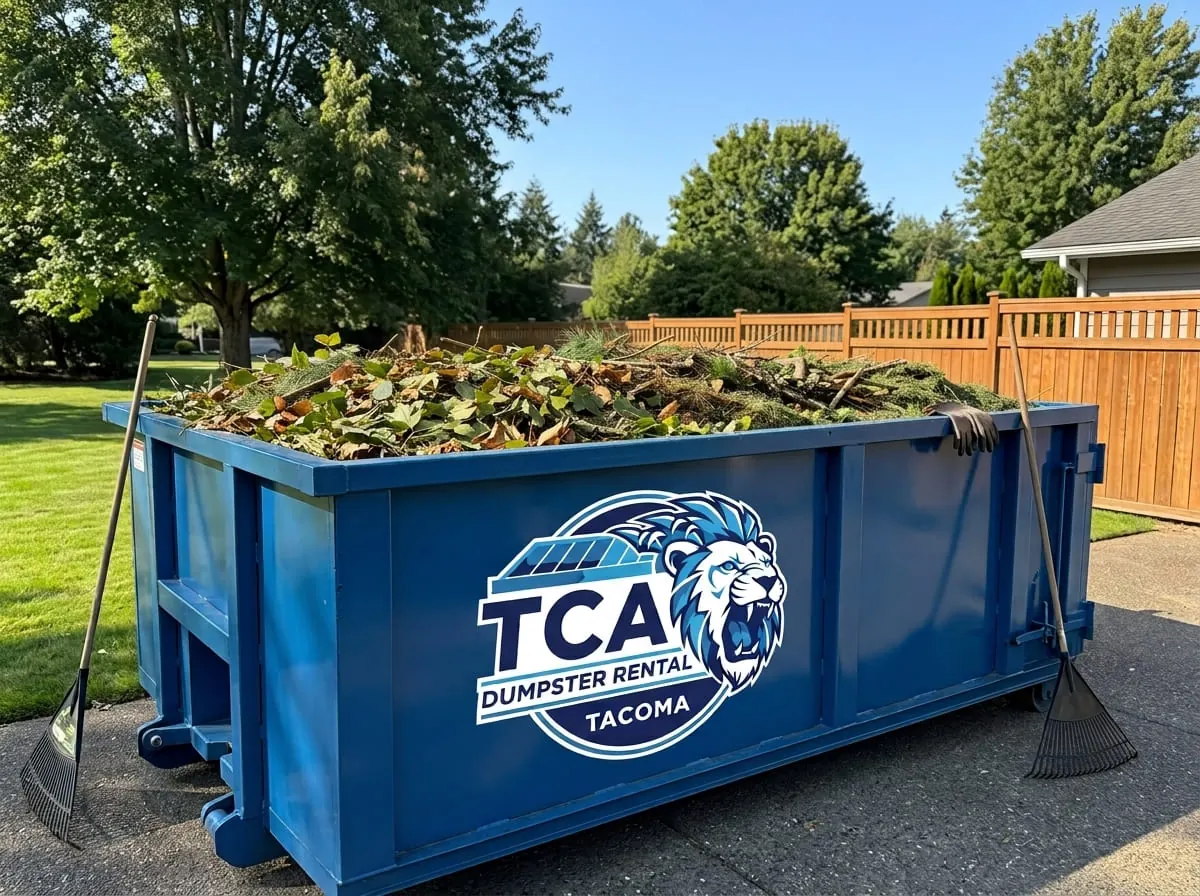
Himalayan blackberry is the single most common reason somebody in Pierce County calls me about a yard container. Not remodels, not roof tear-offs — blackberry. I have been running roll-offs around Tacoma since 2012, and it goes the same way every time: somebody buys a house in Parkland with a nice flat back third of the lot, walks out there in July, and finds a bramble the size of a garage with a fence line somewhere inside it.
This is how to do that job properly: kill the plant instead of giving it a haircut, understand why green cane fills a container faster than any other yard debris, and keep disposal costs down by not mixing green waste with junk.
Why Himalayan blackberry is the regional nemesis
Himalayan blackberry is a designated noxious weed in Washington State, and it earned the title. It is an introduced species with no meaningful competition here, and the maritime climate of the South Sound is close to ideal for it. The canes reach fifteen feet and arch over. When a cane tip touches soil it roots and starts a new crown, which is how a thicket walks across a property a few feet a year without anybody noticing. Underneath, the plant builds a woody root crown — a knot of tissue at the base that stores energy and resprouts from a fragment the size of your thumb. Cut the canes and leave the crown and you have pruned it. You will see new growth in six weeks.
Around Tacoma it shows up in the same places every time: vacant lots, greenbelt edges, alley fence lines, the slope nobody mows, the corner behind the garage. Same story in Parkland, Spanaway and Graham, where lots run bigger and the back acre gets away fast. And because blackberry grows over things rather than around them, the thicket holds whatever was there before — old cyclone fencing, a fridge, a burn barrel, three tires. Plan for that.
Killing it, not trimming it
The work splits into two jobs that feel like one: get the top growth off so you can see the ground, then deal with the crowns. People who skip the second half are doing this again next summer.
Step one: take the canes down
Cut canes to knee height and pull the material clear as you go, rather than cutting the whole patch and then trying to untangle a mat. A brush cutter with a metal blade, good loppers and a machete cover most of it. Drag material out with a hay hook or manure fork — gloves alone are not enough.
Step two: get the crowns out
Once the ground is visible the crowns are obvious: woody, knuckled, usually fist-sized or bigger on an old thicket. A mattock or heavy grub hoe is the right tool. Get under the crown and lever it up with as much root as will come. In wet Puget Sound soil in late winter they pull far easier than in August hardpan. If you cannot dig them — rocky slope, fence line, septic field — the alternative is exhaustion: cut every regrowth flush for two full growing seasons. It works, but it is a schedule, not a weekend.
The honest timeline
One weekend clears a thicket. It does not kill it. Assume two to three seasons: clearing and crown removal in year one, walk-and-cut on regrowth through year two, spot work in year three. Seed in the soil will keep offering you volunteers. The difference between a solved problem and an annual chore is whether you go back.
Safety, and what is hiding in there
Thorns are the least of it, though they will find you through a cotton sleeve. Wear gauntlet leather gloves, long sleeves you do not care about, eye protection — a released cane whips at face height — and real boots. The bigger hazards are the ones you cannot see. Ground-nesting wasps love the base of an old bramble, and the first warning is usually the brush cutter — work the perimeter first and keep a retreat path. Old fence wire is the other: blackberry grows straight through cyclone fabric and barbed wire, and a blade catching buried wire throws it. Walk the fence line by hand before anything motorized goes near it.
The debris maths that surprises people
Here is where estimates go wrong. Fresh-cut cane is bulky and full of water. It does not stack, it does not compress on its own, and a pile of it is mostly air. A thicket that looks like a pickup load from the deck is routinely eight to twelve cubic yards once cut and loose.
Two rules. Cut cane takes up roughly twice the space you picture, so load in layers and stomp each layer down — walking on it inside the box gets thirty to forty percent more in. Root crowns are the opposite: dense, soil-packed, and a few hundred pounds of them disappears into a corner. Keep them low and spread out.
The wet-season multiplier
Anything cut between October and May is going to drink. Brush left in an open pile through a Tacoma winter week gains serious weight, and green waste is billed by tonnage at the far end. In the wet months, load as you cut and get the container gone rather than staging a pile for three weekends. If it has to sit, cover it — a cheap poly tarp is the best return on money in this job.
Keep clean green separate — it genuinely costs less
This is the part that saves real money. Clean yard debris goes to a composting facility; mixed debris goes to landfill at a higher rate. Same container, same truck, completely different disposal cost — and a contaminated load gets charged as garbage for the whole box, not just the offending item.
Clean green means canes, brush, limbs, leaves, grass clippings, prunings, hedge material and untreated woody plant material. That is it. What ruins a green load: soil and sod, rock and gravel, plastic nursery pots, plastic sheeting and landscape fabric, treated or painted timber, fence panels and posts, old fencing wire, hardware, tarps, and household junk pulled out of the thicket. Landscape fabric is the sneaky one — it comes up in shreds tangled in the roots, and it is plastic.
The practical answer is two containers, or one container plus a staging area. Green in the box; metal, fencing, fabric and junk in a separate pile that goes out on a second haul or as a junk removal run. With one box on site, run the green load first and the debris load second. Ask for the split when you book. More detail in our guide to what can go in a dumpster in Pierce County and our Pierce County recycling and disposal overview.
The rest of the South Sound lineup
Blackberry is the headline, but a clearing job here usually turns into a mixed haul. English ivy is the second call — pulled off Douglas fir trunks where it has climbed thirty feet, or peeled off the north side of a Craftsman where it has worked into the siding. Ivy mats, and it weighs more per yard than people expect once bark and soil are in it.
Laurel and arborvitae hedge removal produces the largest single volume of anything we handle; a forty-foot run of overgrown laurel is a 30 yard job on its own once trunks and root balls are counted. Holly is dense, heavy, and worse than blackberry on gloves. Scotch broom — another state-listed noxious weed — pulls easily in wet soil and is mostly volume. Bamboo is its own project: the rhizome mat is the plant, the culms are just evidence.
After a South Sound windstorm we run limb-drop cleanups for a week straight — fir and maple limbs, bulky and heavy where the wood is green. Cut to length before loading; a box packed with eight-foot limbs is half air.
And the quiet one: moss and thatch. Dethatching a Puget Sound lawn in spring produces shocking tonnage out of a small yard, because moss holds water like a sponge. A 10 yard box of wet thatch can outweigh the same box full of cut cane.
Stumps and root balls: a weight problem, not a volume problem
Stumps and root balls are limited by tonnage, not by how much room they take. Soil clings to roots, and wet soil runs close to a ton per cubic yard, so a few large laurel root balls and a fir stump hit a container's weight allowance long before the box looks full. The rule we work to: stumps and root balls go in a smaller box, loaded flat and spread out, and they do not share a load with a full clearing job. Knock the soil off first — that dirt is billable weight. If real soil, rock or concrete is coming out with the roots, that belongs in a heavy debris box.
Noxious weed disposal is your responsibility
Because Himalayan blackberry and Scotch broom are designated noxious weeds, moving them carelessly is how infestations spread. Do not compost blackberry crowns or bamboo rhizome in a home pile — a backyard heap never gets hot enough, and you are building a nursery. Do not haul loose cane in an open bed dropping fragments the whole way. Contain or bag anything with viable crowns, seed or rhizome and send it to a commercial facility that composts at temperature.
Before a large project it is worth ten minutes on the Washington State Noxious Weed Control Board site to confirm what is listed and in what class, then check current guidance from Pierce County, which runs the county noxious weed control program. If the job touches a right-of-way, greenbelt or street tree inside city limits, check with the City of Tacoma first.
Matching debris to a container
Bulky material needs volume; dense material needs weight allowance. Most yard jobs are a mix, which is why the right box is usually one size up from what you first picture.
| Yard debris type | Bulky or heavy? | Recommended container |
|---|---|---|
| Fresh-cut blackberry cane | Very bulky, moderate weight | 20 or 30 yard |
| Blackberry root crowns with soil | Heavy, low volume | 10 or 15 yard |
| English ivy off trees or siding | Heavy and matted | 15 or 20 yard |
| Laurel or arborvitae hedge removal | Very bulky, heavy trunks | 30 yard |
| Holly and dense evergreen prunings | Heavy for the volume | 15 or 20 yard |
| Scotch broom pulls | Bulky, light | 20 yard |
| Bamboo culms and rhizome mat | Bulky culms, heavy rhizome | 20 yard |
| Storm limb drop, cut to length | Bulky, heavy when green | 20 yard |
| Moss and thatch from dethatching | Heavy, deceptively small | 10 or 15 yard |
| Stumps and root balls | Heavy, weight-limited | 10 or 15 yard, loaded flat |
| Full lot clearing, mixed green | Bulky with heavy pockets | 30 or 40 yard |
Sizing a real clearing job
For a single fence line or one back corner, a 20 yard dumpster is the workhorse — enough volume for loose cane without wasting weight allowance. For a hedge removal, a full back yard, or a lot left alone for a decade, go to a 30 yard. Crowns, stumps and thatch belong in a 10 yard or 15 yard box, where low walls make loading heavy material easier.
Our roll-off trucks need roughly sixty feet of straight approach plus overhead clearance, so trim the driveway branches before the truck comes, not after. If you are worried about the surface, we put boards down — see our notes on protecting a driveway during delivery. Still unsure? The Tacoma dumpster sizing guide walks through it.
Ready to get the back corner of your lot back? TCA Dumpster Rental has been clearing blackberry, ivy and hedge debris across Tacoma, Pierce County and the South Puget Sound since 2012, and we will tell you straight whether you need one box or two. Book yard waste removal, check our service areas, or call and describe the thicket — (253) 328-9630.
Questions this guide did not answer? Call (253) 328-9630. We would rather spend two minutes on the phone than have you order the wrong container.