
Cleanouts
The Weekend Whole-Home Cleanout: A Room-by-Room Plan for Tacoma.
Most people underestimate a whole-home cleanout by half. Here is the room-by-room order, the four-zone staging method, and the Tacoma-specific traps, after thirteen years of driveways.
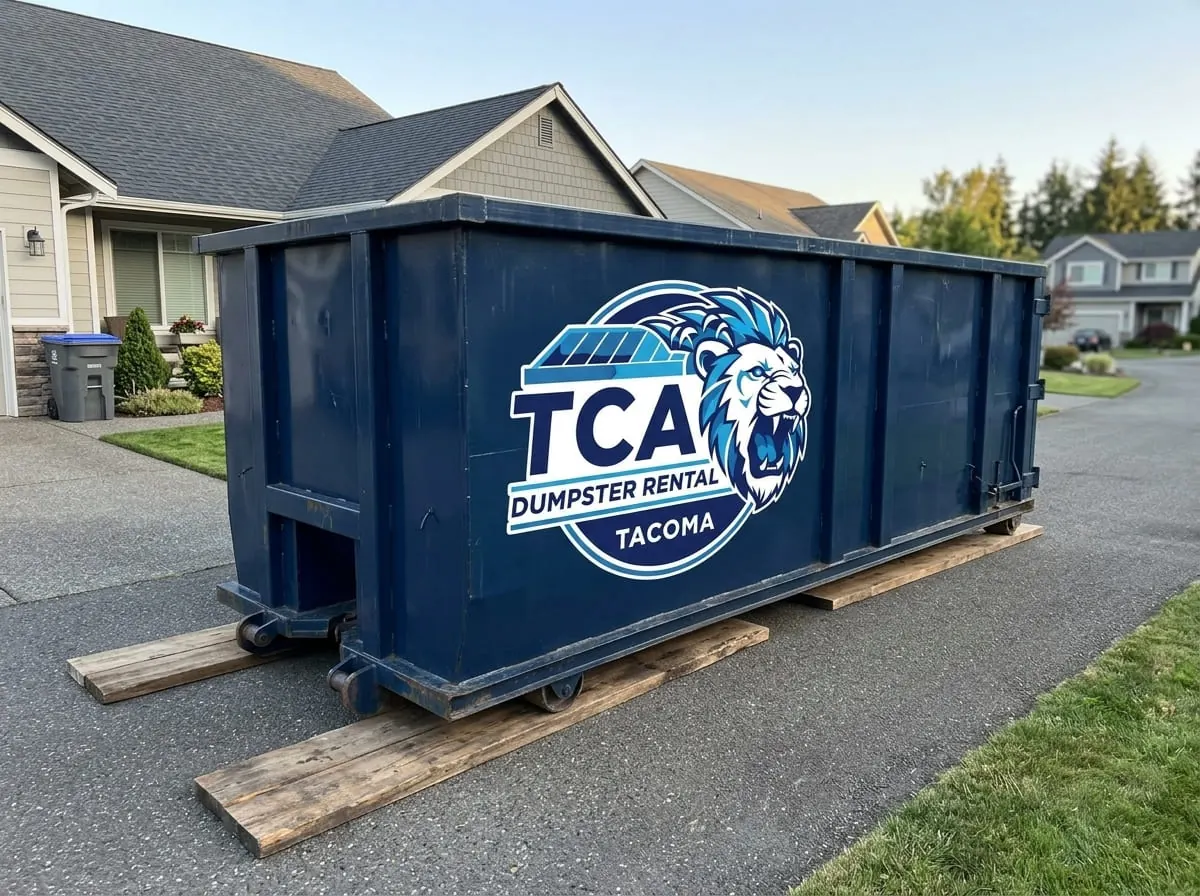
Every spring and every September my phone does the same thing. Somebody stands in a garage in the North End or up off Proctor, looks at twenty years of accumulation, and decides this is the weekend. I have been dropping roll-off boxes in Pierce County since 2012, and I know how that weekend goes: twice as long as planned, one trip out for contractor bags, and a garage that ends up emptier but not empty.
That is not a criticism. The reason people underestimate a cleanout is not laziness — it is that the volume of stored goods in a house stays invisible until you pull it out into daylight. A single garage bay looks like a small room. Empty it onto the driveway and it is a small warehouse. Here is the plan we hand customers who want to do it properly in a weekend.
The honest timeline, and the crew you actually need
Most people budget one day and two people. For anything past a one-bedroom condo, that is roughly half of what the job needs. Here is my rule after thirteen years of watching it: three to four able adults, two full days, for an average three-bedroom Tacoma house with a basement and a garage. Not two people for two days — the arithmetic is not the same, because a lot of the work is two-person carries and one person always ends up running the sorting station while others fetch.
The estimate slips because of decision fatigue, not muscle fatigue. You can carry boxes for eight hours. You cannot make eight hundred keep-or-toss calls in eight hours without crawling by mid-afternoon. That is exactly why the staging method below exists — it separates deciding from carrying.
Budget it like this. Friday evening: container arrives, driveway cleared, zones laid out. Saturday: the big unemotional spaces, then sorting and the first load. Sunday: interior rooms, the attic, the final load, and the tarp.
Stage first, load second: the four zones
Do not carry anything straight from the house to the container. It sounds efficient and it is the biggest mistake I see. Once something goes over the rail it is gone, and half the driveway arguments I have witnessed were about a box somebody threw before somebody else got a look at it. Mark out four zones on the driveway or garage floor first — painter's tape and marker on cardboard is plenty.
- Keep — goes back into the house, in a labelled box, to a decided home. If you cannot name where it lives, it is not a keep.
- Donate or sell — usable furniture, tools, sporting goods, clean textiles, working small appliances.
- Recycle or special handling — metal, electronics, paint, batteries, fluorescents, anything covered in the restricted list further down.
- Dispose — the container. Everything else.
The zones do a second job: they show you your progress. A growing donate pile is visible proof the day is working, which matters at hour six. Load the container only when a zone fills up, and load it deliberately — more on that at the end.
The room-by-room order that actually works
Order matters more than speed. Start where the stuff is bulkiest and the emotional weight is lightest — it builds momentum and frees the floor space you need for staging. Finish with the rooms that will slow you down.
- Garage or basement first. The largest volume, the least sentiment, and the space you will need for the rest of the job. Empty it and you have gained a staging area.
- Detached garage, shed, and side yard. Same logic, and these are usually the wettest — you want them done in daylight while you still have energy for hauling.
- Utility, laundry, and mudroom. Quick wins — obvious keeps and obvious junk.
- Kitchen and pantry. High volume, fast decisions, and you will find things that should have left in 2019.
- Bathrooms and linen closets. Fifteen minutes each if you are honest about towels.
- Bedrooms, guest room first. Work outward from the least-used.
- Living areas and the dining room. Furniture decisions live here — break down anything leaving.
- Home office and paperwork. Slow. Set a shred box and move on — do not read.
- Attic or loft, and the sentimental boxes. Last, deliberately. By now the decision muscle is trained and the container is mostly full, which imposes a useful discipline.
Tacoma houses have their own rules
Housing stock here is old, and that changes the job. A lot of the North End, Hilltop and Proctor is pre-war, which means deep full basements and daylight basements with narrow, turning stairs. Measure the stair width and the turn at the bottom before you promise yourself the workbench is coming out in one piece. It usually is not.
Then the crawlspaces. Ours are damp eight months of the year, and anything porous stored down there — cardboard, fabric, books, paper records, upholstered furniture — has very often gone mouldy or mildewed past saving. I say it bluntly because people try to rescue things they should not. Soft cardboard, a musty smell, visible growth on fabric: it goes.
Add the detached garage at the end of the drive, the shed with the mower and forty pounds of forgotten fertiliser, and the attic reached by a ceiling hatch and folding ladder. That hatch is why the attic goes last and needs two people — one above passing down, one below receiving.
Mould, mildew, and basic protection
Wear an N95, wear gloves, and open the space up before you move anything. If a basement has been shut for years, put a fan in a window and give it twenty minutes. Bag mouldy material where it sits rather than carrying it open through the house. The EPA's guidance on mould is worth ten minutes before you open a sealed hatch.
The Pacific Northwest garage is a different animal
I have loaded garages elsewhere in the country. Ours are not the same. A Tacoma garage holds a life spent outdoors in a climate where everything lives under cover: camping and hiking gear, three generations of tents, kayaks and paddleboards on ceiling hoists, ski and snowboard kit for the passes, fishing rods and crab pots, waders, a wall of rain shells, bikes, and the roof rack off the previous car.
That gear matters twice over. A lot of it is worth real money secondhand and should never touch the container — outdoor consignment and gear swaps move used kit here in a way they do not elsewhere. And the bulky pieces are what set your size: kayaks, ladders and a dismantled bed frame are volume, not weight, and volume is what you rent.
Wet-season weight — the mistake that costs money
Anything stored damp weighs far more than it looks. Soaked carpet, a mildewed sofa, wet cardboard, a rain-filled tote of clothes — it all comes in heavy on the scale, and you pay by the ton over the allowance. An uncovered container also gains water fast between October and May. Leave a box open through a Puget Sound weekend and you have bought yourself rain.
Tarp the container every night, and any time you break for more than an hour. We supply tarps. Use them — it is the cheapest thing in the whole job. There is more on the weight side in our Tacoma sizing guide.
What cannot go in the container
Every cleanout produces a small pile of things the landfill will not take, and every one of them has a proper local destination. Set a labelled corner aside on day one and drop them in as you find them.
| Item | Where it goes |
|---|---|
| TVs, monitors, computers, laptops | E-Cycle Washington drop-off, free for households |
| Fluorescent tubes and CFL bulbs | LightRecycle Washington collection sites |
| Paint, stain, varnish | PaintCare drop-off at participating retailers |
| Solvents, pesticides, pool chemicals, fuel, propane | Pierce County household hazardous waste facility |
| Fridges, freezers, AC units, dehumidifiers | Certified refrigerant recovery before disposal |
| Tires | Tire retailer or transfer station, per-tire fee |
| Car and lithium batteries | Auto parts retailer or HHW facility |
| Mattresses and box springs | Allowed, but call ahead — they are handled separately |
Paint catches people out, because a Tacoma garage typically holds fifteen half-cans of it. PaintCare takes leftover architectural paint at drop-off sites across Washington at no charge, and the Washington State Department of Ecology is the reference for anything you are unsure about on the hazardous side. For the full local rundown, see our guide to what can go in a dumpster in Pierce County.
Donation and reuse before disposal
Anything that still works should leave through the front, not over the rail. Habitat for Humanity's ReStore takes cabinetry, doors, light fixtures and sound furniture. Goodwill and the local thrifts take clothing, housewares and small appliances. Outdoor gear finds a buyer fast here, books go to library sales, and a metal recycler will take the old swing set and rusted shelving. Every item that leaves this way is one you are not paying to bury.
Sizing it, and where the box goes
Cleanouts are bulk, not tonnage — you run out of room long before you run out of weight. Size up rather than down; a second haul costs more than the next size.
| Home | Container | Realistic timeline |
|---|---|---|
| Apartment or 1-bed condo | 10 or 15 yard | 1 day, 2 people |
| 2-bed house, no basement | 15 or 20 yard | 1–2 days, 2–3 people |
| 3-bed house with garage | 20 yard | 2 days, 3 people |
| 3–4 bed with basement and garage | 30 yard | 2–3 days, 3–4 people |
| 4+ bed, decades of accumulation | 40 yard | 3–4 days, 4+ people |
| Full estate or hoarding-level | 40 yard, likely two hauls | Plan a week |
The 20 yard and 30 yard are the workhorses of residential cleanouts and cover the large majority of what we deliver. The 40 yard is for a genuinely full house — it is a big footprint and needs the driveway room to match.
On placement: older Tacoma lots are narrow, and a 40 will not fit where a 20 will. We need roughly 60 feet of straight approach and 23 feet of clearance overhead for the arms, with no low branches or wires. Rear alleys off the older grid work well when the alley is clear and unblocked — check with neighbours the day before. If the box has to sit on the street rather than private property, that is a permit, and our Tacoma permit guide covers it. We put boards down as standard, and there is more on that in our driveway protection notes.
Loading discipline: the last twenty percent
How you load decides whether the job fits in one box. Heavy and flat first — doors, plywood, dismantled bed frames, shelving — laid across the floor as a base layer. Break down everything that comes apart; an intact dresser wastes the volume of four flat-packed ones. Fill voids with bags and small items rather than leaving air pockets, and work front to back so you are not climbing a mound.
And level with the top rail. Nothing above it. An overloaded box is unsafe to transport, cannot be legally tarped, and will be refused — which turns a finished weekend into an unfinished one. When you are done for the night, tarp it.
If the job turns out bigger than the weekend, that is normal and it is fixable. We run residential cleanout containers across Tacoma, Pierce County and the South Puget Sound, plus full-service junk removal when you would rather not do the carrying, and estate cleanout support when the job is that kind of job.
Ready to book the weekend? Call TCA Dumpster Rental Tacoma at (253) 328-9630 and tell us the house, the driveway and the date — we will tell you the size, drop it Friday, and collect it Monday. You can also reach us through our contact page. Thirteen years of Tacoma driveways says you will be glad you sized up.
Questions this guide did not answer? Call (253) 328-9630. We would rather spend two minutes on the phone than have you order the wrong container.