
Pricing
What Does a Dumpster Rental Actually Cost in Tacoma?
A Tacoma hauler of thirteen years explains the structure behind a dumpster quote: what a real flat rate includes, the six factors that move it, and where other companies hide their charges.
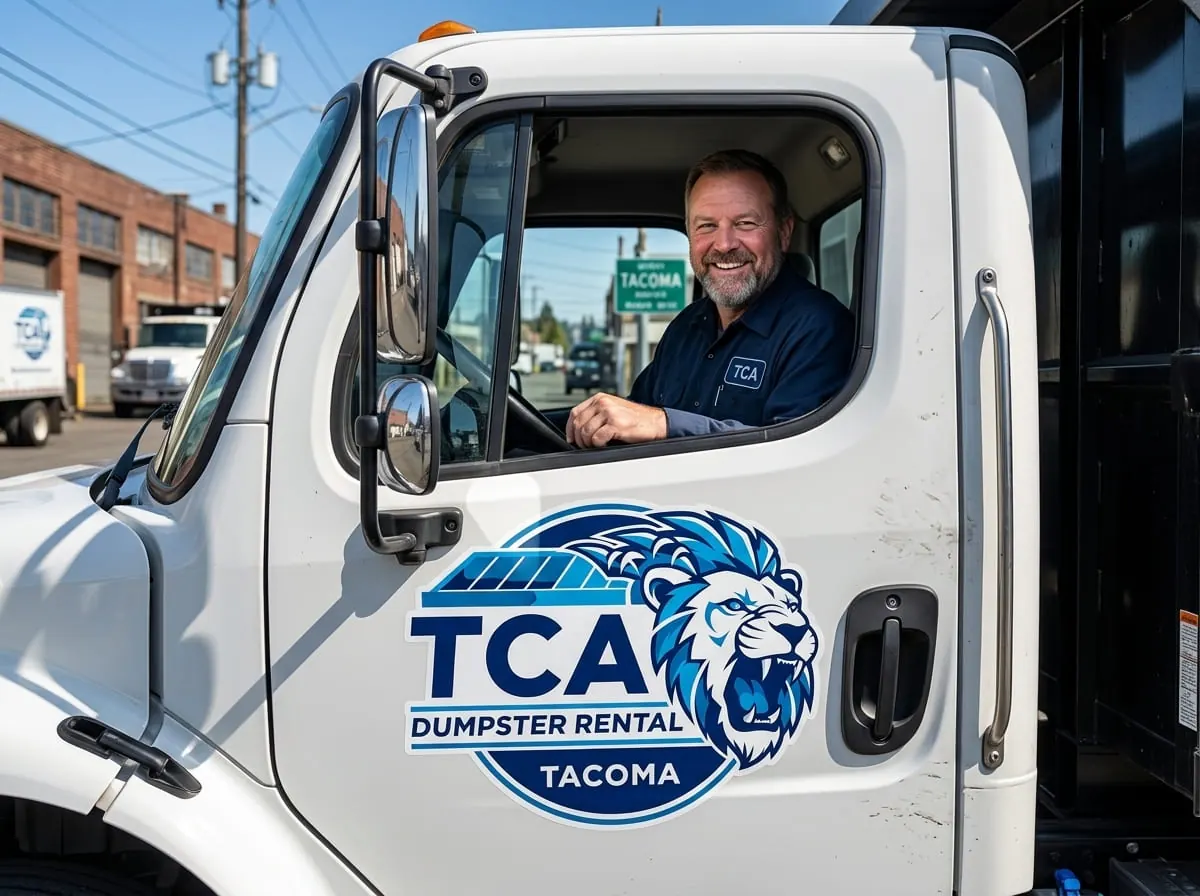
I have been putting roll-off containers on driveways in Tacoma since 2012, and the question I get more than any other, before size, before scheduling, before anything, is what it costs. It deserves a straight answer. The honest answer is not a single number, it is a structure. Once you understand it you can hear the difference between a real quote and a teaser in thirty seconds on the phone.
So this is the breakdown I would give a neighbor. No figures, because they move with fuel, with gate rates and with the season, and because any hauler who publishes a fixed price without asking what is going in the box is telling you a story. What I can give you is what drives the number and where the money hides in other people's paperwork.
What a genuine flat rate includes
A flat rate is not a marketing word. It means four things are bundled into one figure that does not move unless you move it: delivery to your site, pickup when you are done, an agreed rental window measured in days, and disposal of the load up to a stated tonnage. All four. If any one of those is missing, it is not a flat rate, it is a deposit.
The trick played most often here is the tonnage. A company advertises a low all-in figure and the allowance is buried three paragraphs into the terms, or not stated at all. You fill the container, it goes to the scale, and the invoice has a second line you never agreed to. Nothing illegal happened. You just were not quoted the whole job. We say the tonnage out loud on the call and put it on the confirmation, because that is the number that decides whether the price you were told is the price you pay.
| What a genuine flat rate should include | What you have to ask about explicitly |
|---|---|
| Delivery to the address, on the agreed day | Dry-run or failed-access fee if the spot is blocked on arrival |
| Pickup at the end of the rental window | Trip fee for a relocation or a second placement on site |
| A stated rental period in days, not "about a week" | Per-day rate once you pass the included window |
| Disposal up to a stated tonnage, in writing | Overage rate per ton past that allowance |
| Taxes and standard transfer station charges | Fuel, environmental, or administrative surcharges |
| Licensed and insured hauling | Handling charge for prohibited items found in the load |
The six things that actually move the price
1. Container size
Bigger box, bigger number, but not proportionally. The steel hauls about the same whether it is a 10 or a 40. What changes is the tonnage that comes with it and what the load weighs at the gate. Walk the size range before you assume you need the biggest one. Most residential jobs land on a 20 yard, whole-house and commercial jobs on a 30 yard, and heavy material almost always belongs in a 10. If you are unsure, our sizing guide works through it room by room.
2. Debris type and density
A container of couches, carpet and cardboard and a container of demolition rubble are the same volume and nothing like the same job. Density decides whether you land near your allowance or double it. Mixed household junk is light and forgiving. Drywall, plaster lath, wet lumber and tile are heavy. Concrete, brick and dirt are their own category.
3. Tonnage allowance
The single most important number in your quote, and most people never ask for it. Everything else is fixed. The tonnage is the variable that turns a good price into a bad one after the fact.
4. Rental duration
Standard windows run about a week to ten days on residential work. Contractors on a phased job want longer. Extra days bill per day and are cheap compared to a swap, but only if you call before the pickup is routed.
5. Placement and access
A roll-off truck needs roughly sixty feet of straight approach and about twenty-three feet of vertical clearance to set and lift the box. Tacoma does not hand that out for free. Narrow alleys in the North End, steep grades on the hill, low wires and street parking that fills by seven all add time, and sometimes a second visit.
6. How far out you are
Distance is fuel and drive hours, both ways, twice. A job in the Stadium District and one out past Graham do not cost the same to serve even with an identical container and load.
Disposal is billed by weight, and that changes everything
Here is the part most customers never see. When the truck leaves your house it drives onto a scale at a transfer station. It weighs full, tips the load, and weighs empty. The difference is what you threw away, and the facility bills us by the ton for it. There is no volume price at the gate. Nobody looks in the box and calls it half full.
That is why the tonnage allowance is the hinge of the whole quote. A hauler who bundles a realistic allowance for the debris you described is pricing the job honestly. A hauler who bundles a thin one is pricing the delivery honestly and gambling on the invoice. Facility and solid waste information for the region comes from Pierce County, and the state rules on what cannot go in a mixed load come from the Washington State Department of Ecology. We keep a plain-English version in our guide to what can and cannot go in the container.
The Pacific Northwest rain factor
This one is local and expensive, and I have watched it catch out-of-town contractors every winter for thirteen years.
From October through May an uncovered container on a Tacoma job site is a rain gauge. Drywall wicks it. Carpet and pad hold it like a sponge. Insulation, cardboard, roofing felt, yard debris and soil all gain real weight. A load that sat inside its allowance when you finished Friday can cross the line by Monday without one more item going in. You did not add debris. You added water, and water gets weighed exactly like everything else.
Tarping is not a nicety here, it is part of the job. Pull a tarp over the box every night and strap it so the wind off the Sound does not take it. If the debris is already wet going in, say so when you call, because it changes the allowance I quote. This matters most on roofing tear-offs, where saturated composition shingle is dramatically heavier than the same square footage dry.
Ask about these surcharges by name
- Overage per ton. What is the rate past my allowance, and is it billed in whole tons or by actual weight?
- Extra days. What is the daily rate after the included window, and how much notice do you need?
- Dry run or failed access. If a car or a low branch blocks the spot when the driver arrives, what does the wasted trip cost?
- Trip fee. If I need the container moved from the driveway to the side yard mid-job, is that a new delivery charge?
- Prohibited items. Paint, tires, batteries, refrigerant appliances and e-waste get pulled and handled separately. What is the charge, and can I hand them over instead?
- Fuel or environmental fees. Percentage or flat, and are they already inside the quoted figure?
Any operator worth hiring answers all six without hesitating. Hesitation is its own answer.
Heavy material is priced differently, and smaller is usually cheaper
Concrete, asphalt, brick, dirt, sod and roofing tear-off are not general debris and should never be quoted as if they were. They go out as a dedicated heavy load, usually in a 10 yard container, often with a fill line marked partway up the wall. That is not upselling in reverse, it is physics and legal axle weight. A 20 yard box filled with broken patio slab cannot legally leave your street.
The result is that the small container is often the cheaper answer for heavy work, because clean concrete or clean soil goes to a recycler at a far better rate than mixed debris at a transfer station. Keep it clean and separated and the disposal side of your bill drops. That is the logic behind our heavy debris service.
Permits are the city's line, not the hauler's
If the container has to sit on a public street, in a parking lane or on the right-of-way rather than on your own driveway, the City of Tacoma requires a permit and the city collects that fee. It is a separate charge from a separate agency, and any hauler who folds it silently into their own figure is doing you no favors. Start at the City of Tacoma for right-of-way requirements, and we cover the process and timing in our Tacoma permit guide. On private property, no permit, which is worth a hard look at your driveway before you assume the street is the only option.
Accounts change the arithmetic
Volume changes pricing here the way it does in any trade. Builders, roofers, restoration crews and property managers get scheduled swap cycles, consolidated invoicing and priority routing, so the numbers are predictable instead of quoted one off. If you pull more than a few containers a year, ask about an account. That is most of what our commercial work looks like.
When a dumpster is not the cheapest option
I would rather tell you the truth and keep you for the next job. There are two situations where you should not rent a container from anyone.
The first is small volume that fits in a pickup bed. Two loads, a truck and a free Saturday, run it yourself to the Tacoma Recovery and Transfer Center and it costs you gate fees and your morning. The second is a small, awkward, heavy set of items, a hot tub, a piano, a garage of furniture, where the work is the lifting and not the volume. That is a junk removal job, two people and a truck, and it beats a container because you are not paying for steel to sit on the driveway all week. Above a pickup load or two, or when the work runs more than a day, the container wins and it is not close.
What to have ready so the quote is firm
Every range I give on the phone exists because I am missing information. Give me these six and the range collapses into a number.
- The address, so I know the route, the grade and the street.
- What the debris is, in plain words. Household junk, roof tear-off, drywall and framing, concrete, yard waste. Mixed is fine, tell me the mix.
- Roughly how much, in rooms, squares of roof, or truckloads you would guess.
- Where it goes, driveway or street, and whether anything overhead is in the way.
- How long you need it, and whether the job is one push or phased.
- Anything unusual, appliances, tires, paint, suspected asbestos in a pre-1990 remodel. Better now than at the scale.
That is the whole method. Ask what the tonnage allowance is, ask what happens past it, ask what a wasted trip costs, and tarp the box from October to May. Do those four and a dumpster invoice will never surprise you.
If you want a firm figure rather than a range off a website, call Grant and the crew at TCA Dumpster Rental Tacoma at (253) 328-9630. We have served Tacoma, Pierce County and the South Puget Sound since 2012, we are licensed and insured, and we run same-day and next-day delivery when the schedule allows. Tell us what you are throwing away and we will give you the size, the tonnage and the price in one sentence, or send the details through our contact page.
Questions this guide did not answer? Call (253) 328-9630. We would rather spend two minutes on the phone than have you order the wrong container.