Cleanouts
Clearing a Family Home in Tacoma: An Estate Cleanout Checklist
Clearing a parent's home is not a weekend job. Here is the order a Tacoma hauler of thirteen years would actually work in, from the documents sweep to the final swap.
The call usually comes on a Tuesday, from someone who has been awake since four in the morning. A parent has died, or has moved into memory care over in Lakewood, and the house on North Ninth or up off South Yakima has to be emptied. There is a listing date. There are siblings with opinions. And there is a lifetime of belongings that nobody has looked at properly since 1987.
I have been running containers around Tacoma since 2012, and estate cleanouts are the job I take the most care with. They are not like a remodel. Nobody is excited. So this is the checklist I give people when they call, in the order I would actually do it.
The Rule That Matters Most: Throw Nothing Away on Day One
Day one is for looking, not for hauling. Not one bag to the curb. Not one box out the door.
The reason is simple and I have watched it go wrong more than once. The mind of a person clearing a house is running on grief and adrenaline, and in that state everything looks like junk. A shoebox of what appear to be old greeting cards holds four savings bonds. A ratty winter coat in the hall closet has eleven hundred dollars folded into the lining, because that generation did not always trust banks. Once a container leaves my yard and goes over the scale, that is finished. There is no getting it back.
So the first pass is a walk-through with a notepad and a phone camera, nothing else. Photograph every room before it is disturbed. Out-of-state family will want those photos later, and so will you when someone asks what happened to the china cabinet.
The Documents Sweep, Before Any Container Arrives
Before I will schedule a delivery for an estate, I ask whether the paperwork sweep is done. It is a one-day job for two people and it saves months.
- The will, and any trust documents or codicils
- Deeds, property titles, mortgage payoff letters, timeshare or cemetery plot paperwork
- Vehicle, boat and trailer titles
- Insurance policies — life, home, auto, long-term care, and old paid-up policies from the 1960s that still pay
- Tax returns, ideally seven years back
- Savings bonds, stock certificates, bank and brokerage statements
- Safe deposit box keys, and any note of which bank
- Military discharge papers, the DD-214 above all — it governs burial benefits and survivor claims
- Pension records, Social Security correspondence, annuity contracts
- Address books and the Christmas card list, which is how you find out who to notify
Where Things Actually Hide
People of a certain generation did not keep valuables in one tidy fireproof box. Check the underside and back of every drawer for taped envelopes. Go through coat pockets and handbags. Open the freezer and look inside foil-wrapped packages. Lift mattress liners and feel along the box spring seam. Fan every book, particularly the Bibles and the big photo albums, because cash and documents get pressed flat between pages. In the garage, look up — the rafters and the joist bays are where the good tools, the coin tins and the ammunition tend to live. Check inside coffee cans on shelves. Check the toilet tank lid in the back bathroom. I am not being colourful; I have had customers find all of these.
Washington Practicalities: Confirm Your Authority First
In Washington, probate runs through the Superior Court in the county where the person lived, which for most of our customers means Pierce County Superior Court downtown. Washington's non-intervention probate is genuinely one of the more streamlined systems in the country — once the court grants non-intervention powers, a personal representative can generally administer the estate without going back for approval at every step. That is a real mercy compared with what families deal with in some other states.
But streamlined is not the same as automatic. Until you have your letters testamentary or letters of administration in hand, you do not yet have legal authority to dispose of estate property, and disposing of it early is the kind of mistake that turns a manageable family situation into a contested one. Talk to the estate attorney before the first container is loaded. General background on the Washington court system is available at courts.wa.gov.
A plain caveat: this is general guidance from a hauler, not legal advice. I move containers; I do not practice law. Every estate is different, and yours should be reviewed by an attorney licensed in Washington.
Firearms, Ammunition and Medications
Washington households have guns in them, and in an estate cleanout they turn up in closets, under beds, in the rafters and in bedside drawers. None of it goes in my container, ever. Do not transport a firearm you cannot safely verify as unloaded. Contact the Tacoma Police Department or the Pierce County Sheriff for surrender and safekeeping, or take it to a licensed dealer who can handle transfer or consignment. Old ammunition, black powder and flares are the same conversation — law enforcement or the hazardous waste facility, not the box in the driveway.
Prescription medications go to a take-back drop box, not the toilet and not the trash. Most pharmacies and several police stations in Pierce County host permanent kiosks; the DEA maintains a national locator at dea.gov. In a house where someone was ill for a long time, this can be a shopping bag's worth, and it should be handled properly.
A Realistic Timeline
Here is the honest number. A three-bedroom Tacoma home with a basement is a three to five day job for four working adults. Not a weekend for one devoted son. And that estimate assumes nobody sits down on the stairs and reads a bundle of letters for an hour, which somebody always does, and should.
Plan the days deliberately: day one for the documents sweep and photographs, days two and three for sorting, day four for loading, day five for the final sweep and the swap if you need one. Book the container with a longer window than you think. Rushing an estate is how things get thrown out that should not have been.
Room by Room, in Working Order
- Master bedroom and closets — documents, jewellery, personal papers. Do this first while everyone is fresh.
- Home office or den — filing cabinets, desk drawers, the safe if there is one.
- Kitchen — fastest room to clear, best morale boost. Expired food out, usable pantry goods to a food bank.
- Living and dining rooms — furniture decisions, china, artwork, anything family members have claimed.
- Spare bedrooms — usually storage by this point in a person's life.
- Bathrooms — medications set aside for take-back, everything else disposed.
- Basement — in the older North End and Hilltop houses these run deep, and the daylight basements are often finished into a second household's worth of belongings. Expect a full day.
- Crawlspace — our damp Puget Sound winters mean cardboard and fabric stored down there has usually gone mouldy. Wear a mask. Most of it is disposal.
- Detached garage and garden shed — tools, fuel, paint, tyres, the mower. The hazardous material lives here.
- Attic — often reached only by a hatch and a ladder, so leave it for a day with two able people and good light. Never last thing on a Friday.
Six Piles, Not Two
The families who get through this well sort into six categories, not the two that panic produces. Keep, family (claimed by a specific person, labelled with their name), sell, donate, recycle, dispose. Coloured tape on each item is faster than lists.
Tacoma has good options for the middle three. Habitat for Humanity's ReStore takes furniture, appliances and building materials. Goodwill and St. Vincent de Paul cover household goods. An estate sale company is worth a call before you decide something is worthless — they see markets you do not. Our Pierce County recycling and disposal guide covers where the rest goes.
What Cannot Go in the Container
| Item | Where it goes |
|---|---|
| TVs, computers, monitors, printers | E-Cycle Washington collection sites, free for households — see ecology.wa.gov |
| Latex and oil paint, stain, varnish | PaintCare drop-off sites at participating paint retailers |
| Solvents, pesticides, pool chemicals, gasoline, propane | Pierce County Household Hazardous Waste facility |
| Refrigerators, freezers, window AC, dehumidifiers | Certified refrigerant recovery before scrapping |
| Tyres | Tyre retailer or transfer station, per-tyre fee |
| Firearms and ammunition | Law enforcement or licensed dealer |
| Prescription medication | Pharmacy or police take-back kiosk |
| Asbestos-containing material | Certified abatement contractor only |
| Furniture, clothing, general household | Roll-off container, after donation sorting |
That last line deserves a warning. If the house predates 1980 and you start pulling up sheet vinyl, scraping textured ceilings or tearing out old duct wrap, stop. Those materials commonly contain asbestos, and Puget Sound Clean Air Agency rules require a survey before that kind of work. Read our asbestos survey guide before you take a scraper to anything. Clearing belongings is fine; demolition is a different job. The broader list of what we can and cannot take is in this Pierce County guide.
Sizing and Swaps
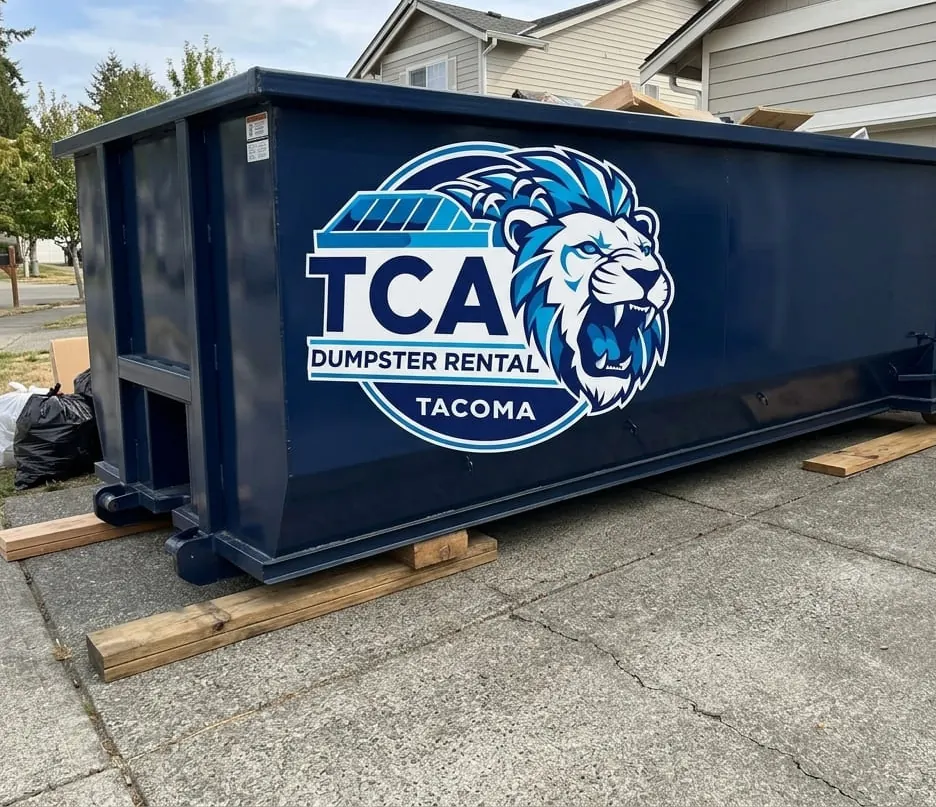
For a typical three-bedroom Tacoma home with a basement and a garage, a 30 yard container handles the whole job in one placement. The alternative many families prefer is a 20 yard with a swap partway through — the smaller box is easier to place on a narrow North End driveway, and the pause between loads gives everyone a chance to catch second thoughts before the first load is gone. If you are unsure, our size comparison and the sizing guide will get you close, or just describe the house to us on the phone.
We schedule estate work with more patience than a construction job. Longer rental windows, quieter deliveries, and swaps timed so the truck is not sitting out front while relatives are arriving. See our estate cleanout service for how we handle it, and service areas for coverage across Pierce County.
Siblings, Distance and Photographs
More of these jobs go sideways over family than over logistics. Two things help. First, photograph anything contested and share it in one album rather than in a group text — an out-of-state sister can claim a lamp from Ohio in ten seconds if she can see it clearly. Second, agree in advance on what happens to items nobody claims. The default should be written down before the sorting starts, not argued about at eight in the evening on day three.
And let people take their time. If a brother needs to sit with his father's workbench for twenty minutes before it goes, that twenty minutes costs you nothing and buys you a decade of goodwill. Paying for a few extra days on a container is the cheapest thing in this whole process. Nobody has ever told me they regretted going slower.
When You Are Ready
You do not have to have a plan when you call. Most people do not. Tell us the address, roughly how big the house is, and what week you are looking at, and we will work out the rest — including crew-loaded help if lifting is not realistic. Grant Sivertsen has run TCA Dumpster Rental Tacoma from 1820 Stewart Street since 2012, serving Tacoma, Pierce County and the South Puget Sound. Call (253) 328-9630 or send us a message, and we will get a container on that driveway when you are actually ready for it — not before.
Questions this guide did not answer? Call (253) 328-9630. We would rather spend two minutes on the phone than have you order the wrong container.